
Strike Tally: Bowling Score
A ball-by-ball bowling score keeper for several bowlers at once, with a pin deck, per-bowler stats and visit history — no account, everything on the phone.
Free · No account · Works offline · 13 languages
Problem
Recreational and league bowlers want to keep their own scores, but most score keeper apps track a single bowler, stop at frame totals, or ask for an account and a connection before the first ball. Nothing on the phone remembers who usually bowls together and how their averages move from week to week.
Solution
I built a score keeper that takes every ball through a keypad or by tapping the pins left standing, works out strikes, spares and the tenth frame itself, and files every game under a visit and a bowler profile. Per-bowler stats are recalculated from that every time they open: average, high series, strike and spare rates, split conversion, and the trend over the last ten games. The constraint that shaped it: no backend and no sign-in — a profile is just a name and a colour that live on the phone.
One night at the lanes
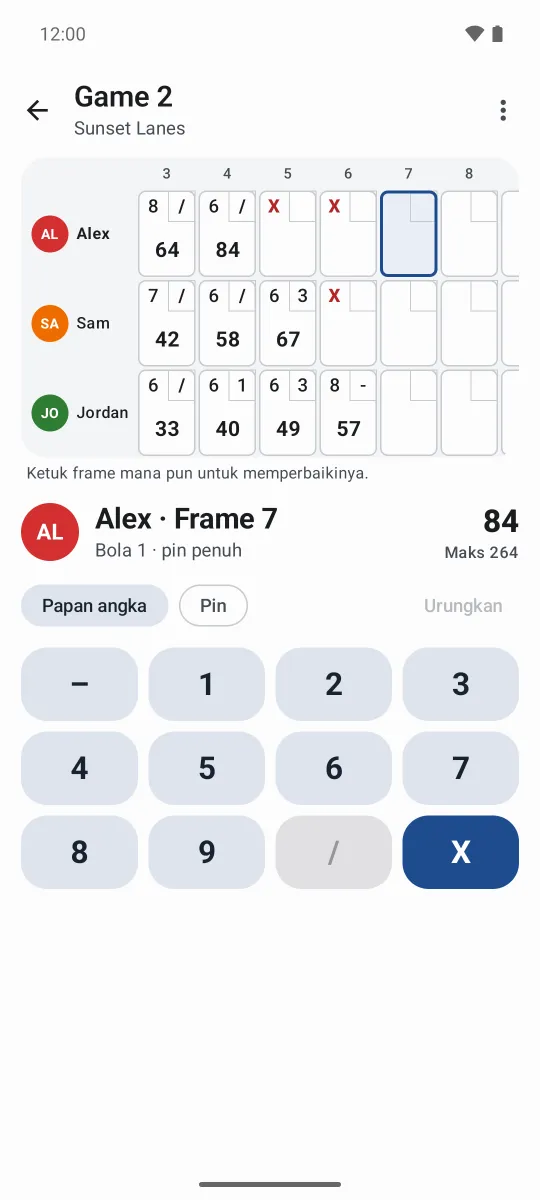
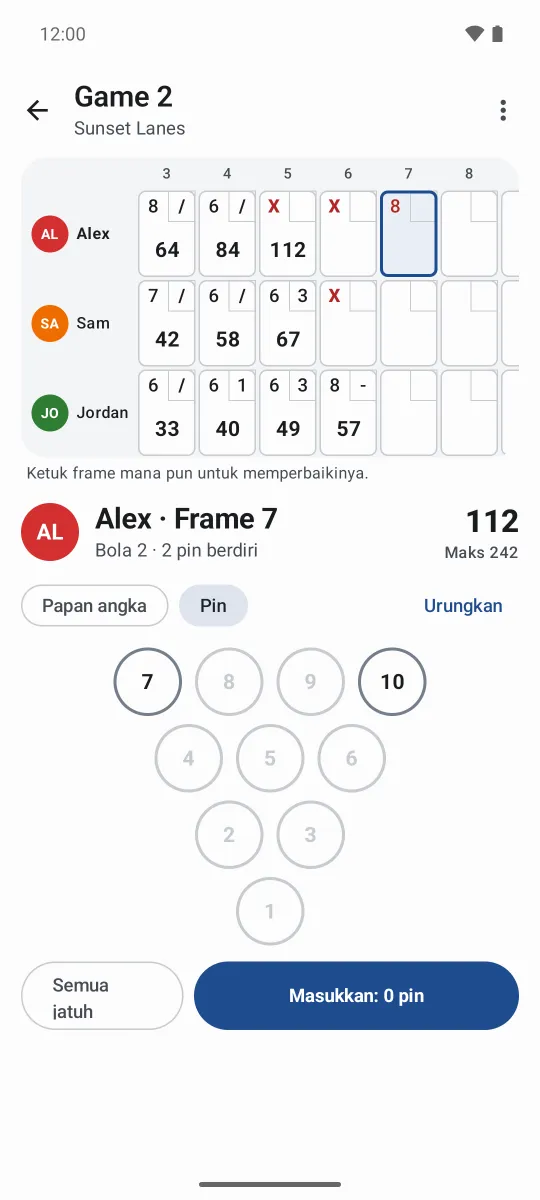
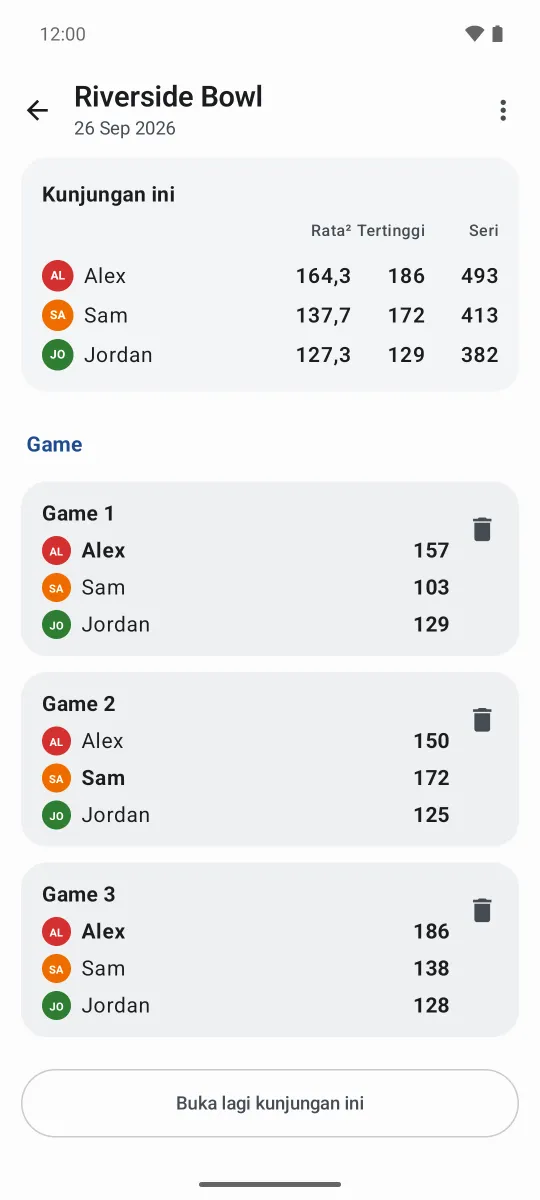
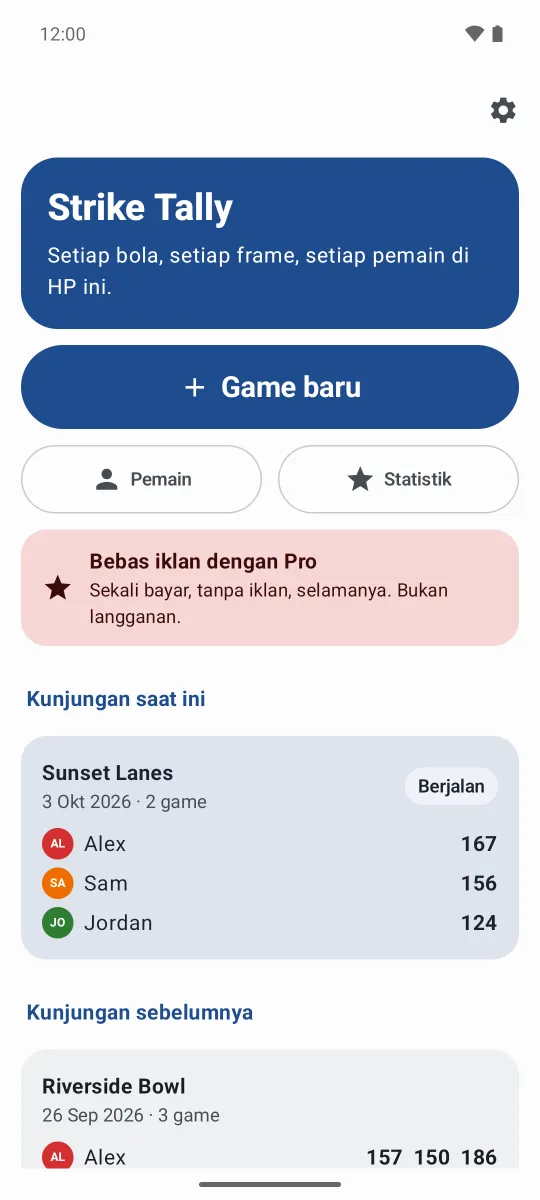
Three bowlers, game two at frame seven, with four earlier visits behind them — the data was bowled through the app itself, not injected.
Swipe to see more screens →
What it does at the lane
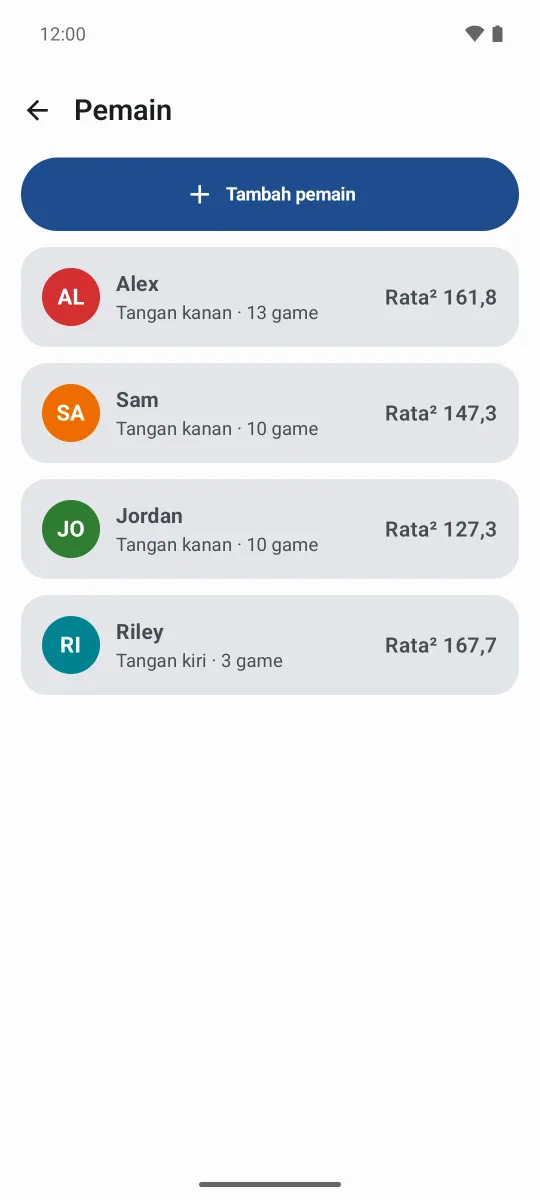
In the same order as the screenshots above.
Score per ball
Strike and spare bonuses fill in as the next balls arrive, just like the screen above the lane, and the tenth frame gets its own bonus balls.
Pin deck
The rack is drawn as seen from the approach; the pins left are stored as a bitmask, so splits like the 7-10 can be recognised.
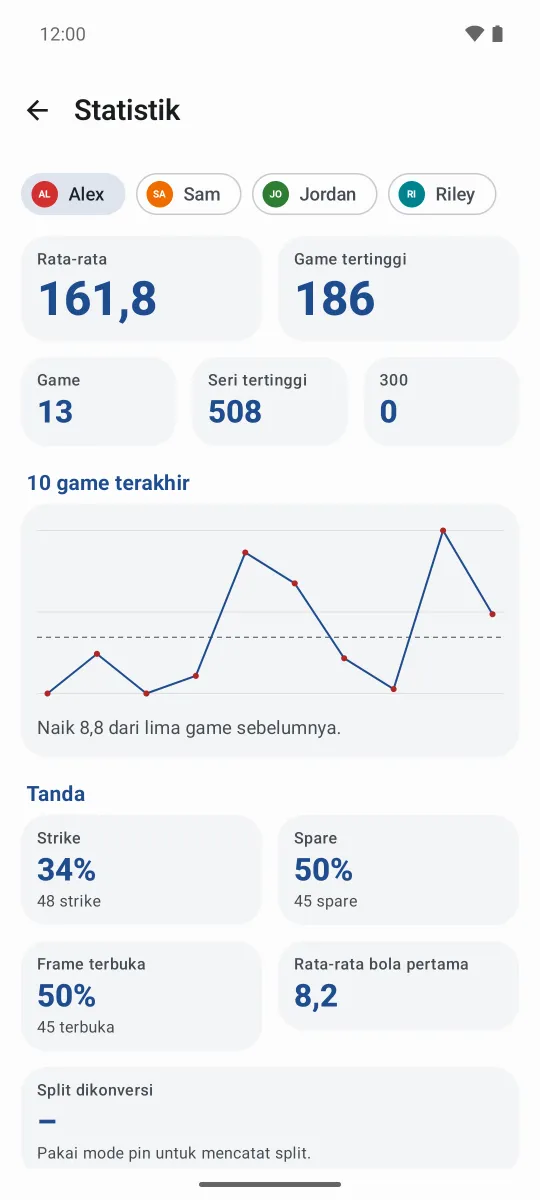
Per-bowler stats
Average, high game and series, strike and spare rates, open frames, first-ball average and a trend chart.
Fix and undo
Any frame can be cleared with a tap, and Undo takes back the last ball.
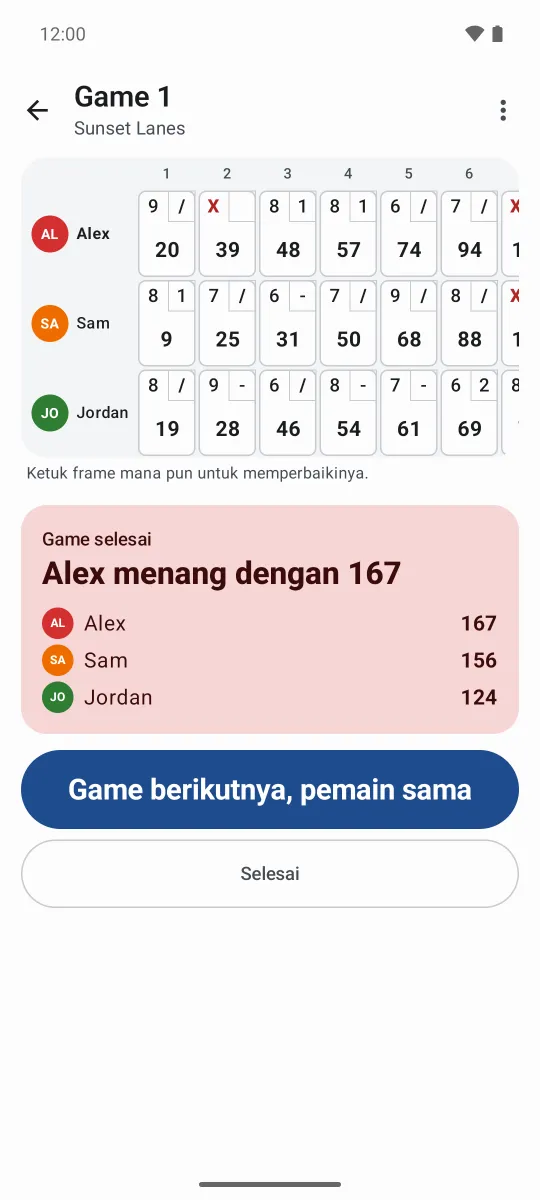
Visits and history
Games are grouped per visit with the place and date, then summarised for each bowler.
Local profiles
Up to six bowlers per game in lane order; a profile is only a name, a colour and a bowling hand.
The numbers behind it
Taken from the PRD and the code.
Languages
13locales
Chosen by the countries with the most bowlers, from the US and Japan to Sweden and Malaysia.
Bowlers
6per game
One lane's worth; turns rotate frame by frame.
Stats
10per bowler
Recalculated from every ball, never stored on their own.
JVM tests
30tests
The scoring engine, split detection, stats and storage are tested without an emulator.
What leaves the device, and what doesn't
Bowler names and scores are never part of it.
- No account, no sign-in, no backend. A bowler profile is local text; there is no server to send it to.
- Scores and stats are worked out on the device. Every ball, visit and profile is stored on the phone only.
- The connection is used for two things: loading ads and, if chosen, Google Play's purchase flow. Scoring works in airplane mode.
- No analytics SDK or crash reporter. The release build uses empty implementations; no Firebase and no third-party tracker.
- Ads through Google AdMob. As a third party, AdMob reads the device's Advertising ID; a one-time Pro purchase removes the ads.
Strike Tally is the eighth app in my apps factory. Its shape comes from the Hand & Foot score keeper, but it deliberately does not use the shared score-sheet module built for that app: in bowling a frame’s score is only final after the next balls are bowled, while the shared sheet stores rounds whose points are already settled. Bending it to fit would have meant changing a core module for one app, so the scoring engine is written as pure functions inside the app itself.
The languages were chosen from market data rather than habit: the United States with the most bowlers, South Korea and Japan with hundreds to thousands of bowling centres, and the Nordic countries with the highest participation per head. That makes thirteen languages, and every store screenshot was captured again in its own language.
The app’s privacy policy lives on its own page.